

Practice Control of Pitch in Words and Short Phrases
The pitch of your voice carries more meaning than the actual words.

Why Pitch and Intonation are Important
What makes the most difference in sounding like a native speaker of a language is having native-like intonation. Pronunciation of individual sounds comes second. Why? Because so much is expressed through intonation.
Here is a video of me reading and demonstrating all of the content in this newsletter:
Meaning is Expressed through Changes in Pitch
The pitch of your voice carries more meaning than the actual words. This is true for every language. You understand a lot of emotions when people say very few words because you hear how they are saying it compared to what they are saying. For example, if you call your friend and ask how she’s doing, you’ll know if something is bothering her even if she only says, “fine.”
Having a different intonation pattern than a native speaker causes communication problems not just because you go up and down in pitch in different places, but because it is more difficult for the listener to understand your meaning, not just your words.
American English listeners are used to the important words being easy to identify by higher pitch and longer vowel duration. Important words can be emphasized by longer duration without higher pitch, but not just higher pitch. When the influence of other languages changes the intonation pattern so it no longer is using higher pitch (and/or longer duration) to create meaning in the same way, this causes confusion in conversations even if the words are pronounced clearly.
Practice Control of Pitch
Word Level
I always begin practice of intonation with changes in pitch in single words: first play and experiment, then gain control.
To practice controlling the direction of the pitch and the duration of the vowels in order to stretch or shorten the duration of the word, it will be helpful to see for yourself on a speech visualization program like WASP.
Sometimes what you feel like you are doing isn’t how it is being heard by someone else. The objective feedback from the speech program can help you integrate what you intend to do and what you actually produce.
The goal is to gain control of how you use changes in pitch to create and express the meanings that you really intend to.
Try it with these single-syllable words:
yes
yeah
sure
no
nope
hi
bye
thanks
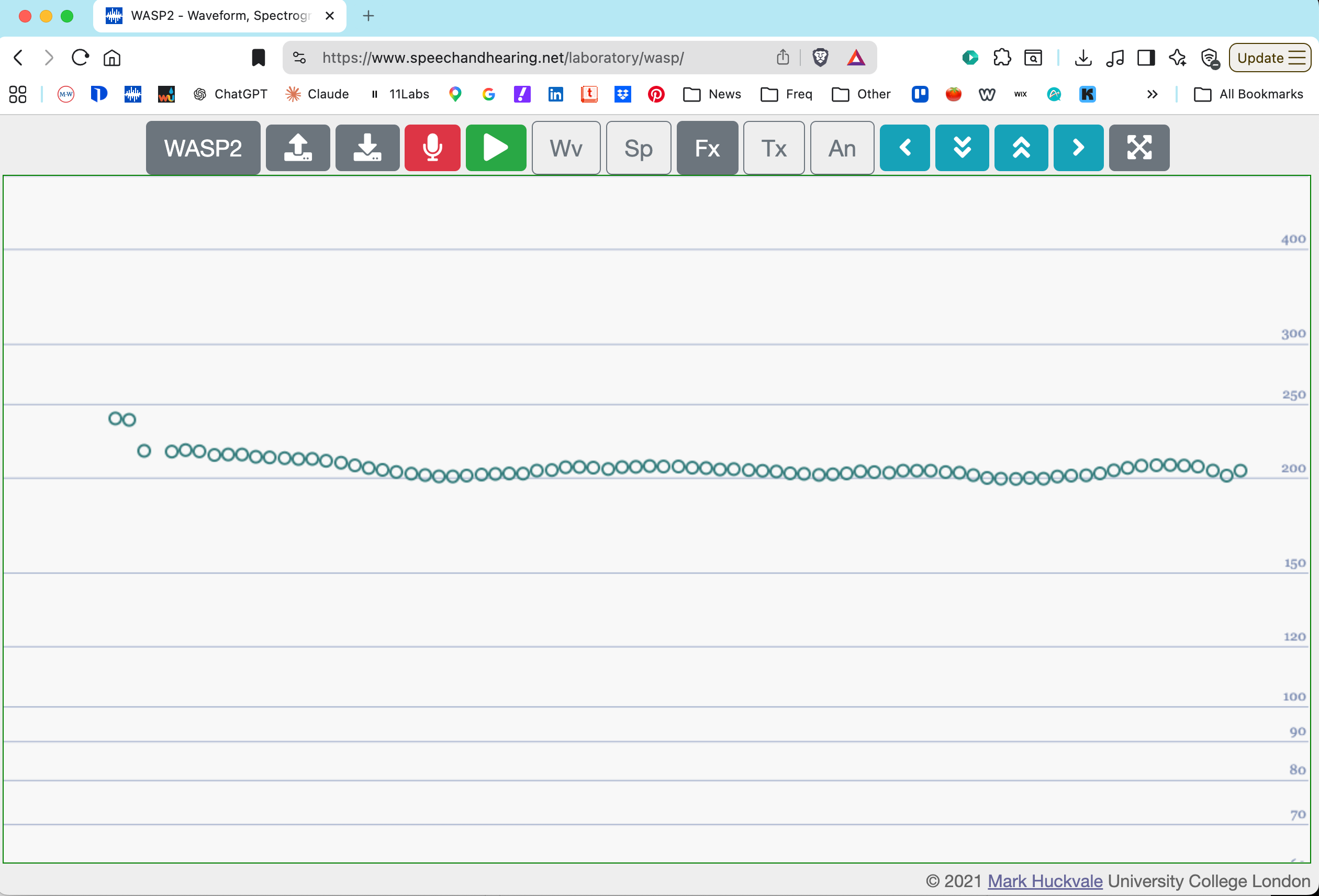
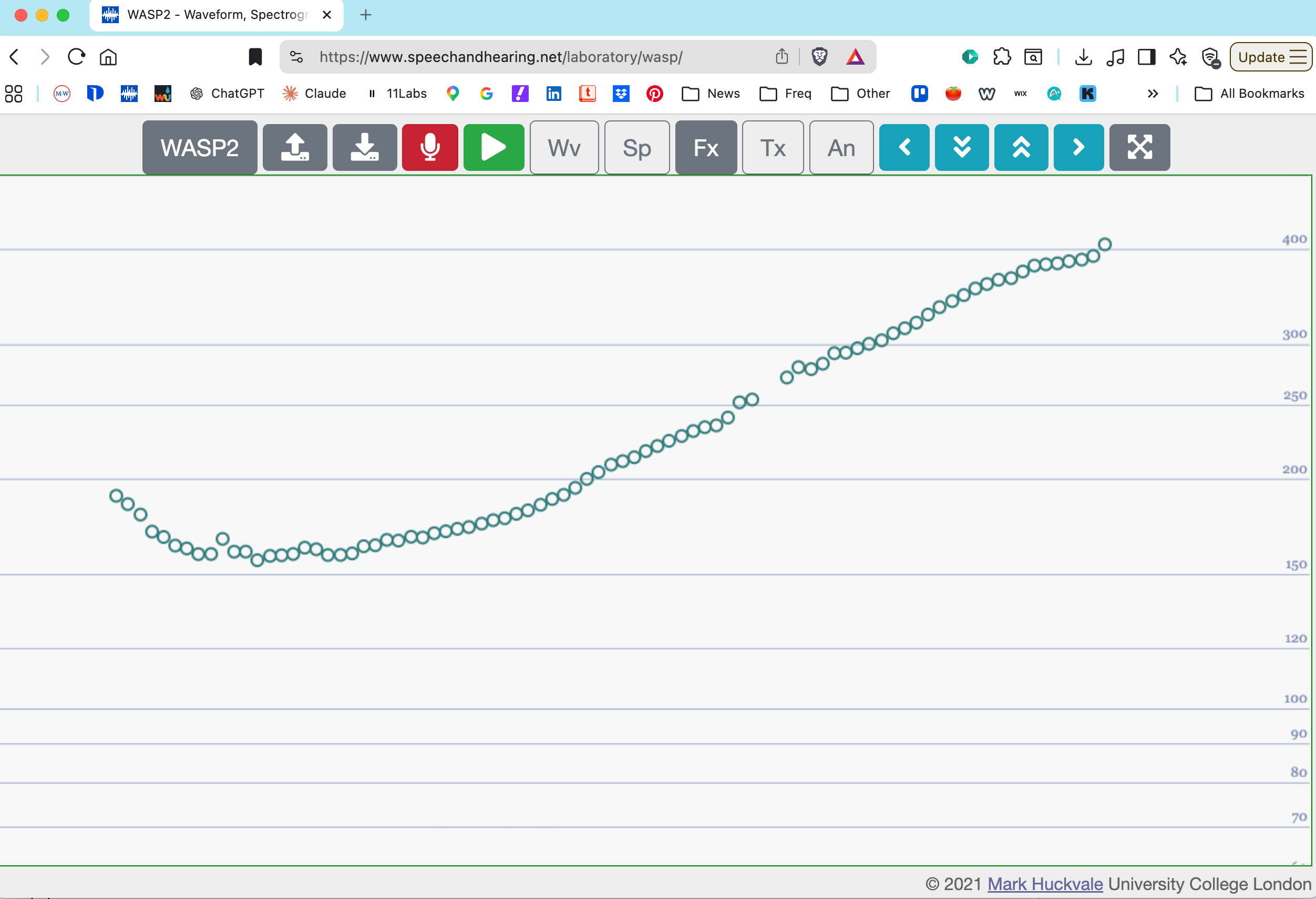
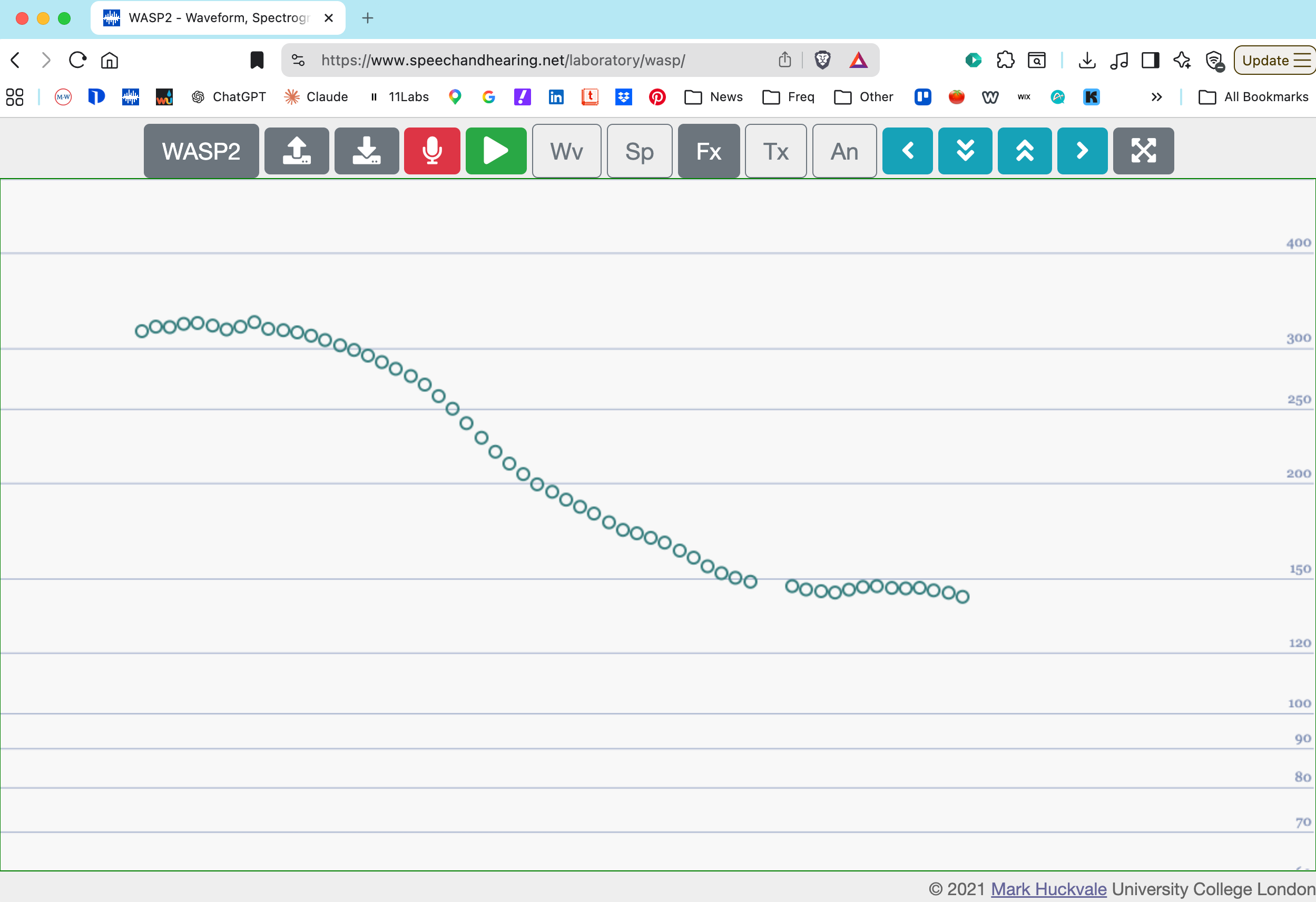
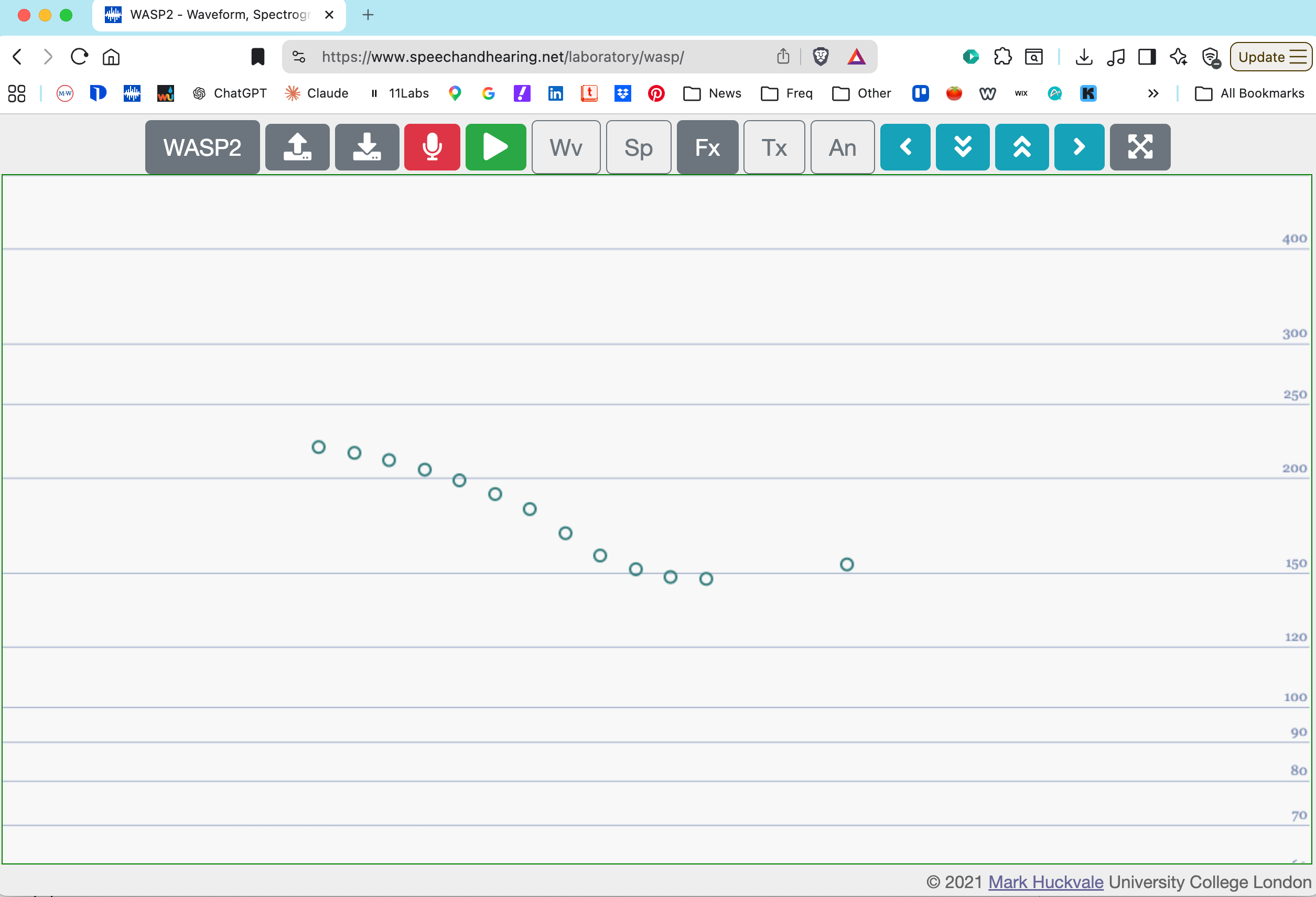
Control your voice to create these patterns of flat, rising, and falling pitch. Your productions should look similar to these if you’re using a speech visualization program like WASP.
1. Flat pitch (no pitch change, like a robot, for practice purpose only)
2. Rising pitch (conveys questioning, unsure)
3. Falling pitch (conveys a statement, sure)
4. Use a very short downward pitch (conveys disagreement, annoyance)
5. Quick very high and low pitch changes (conveys intensity)
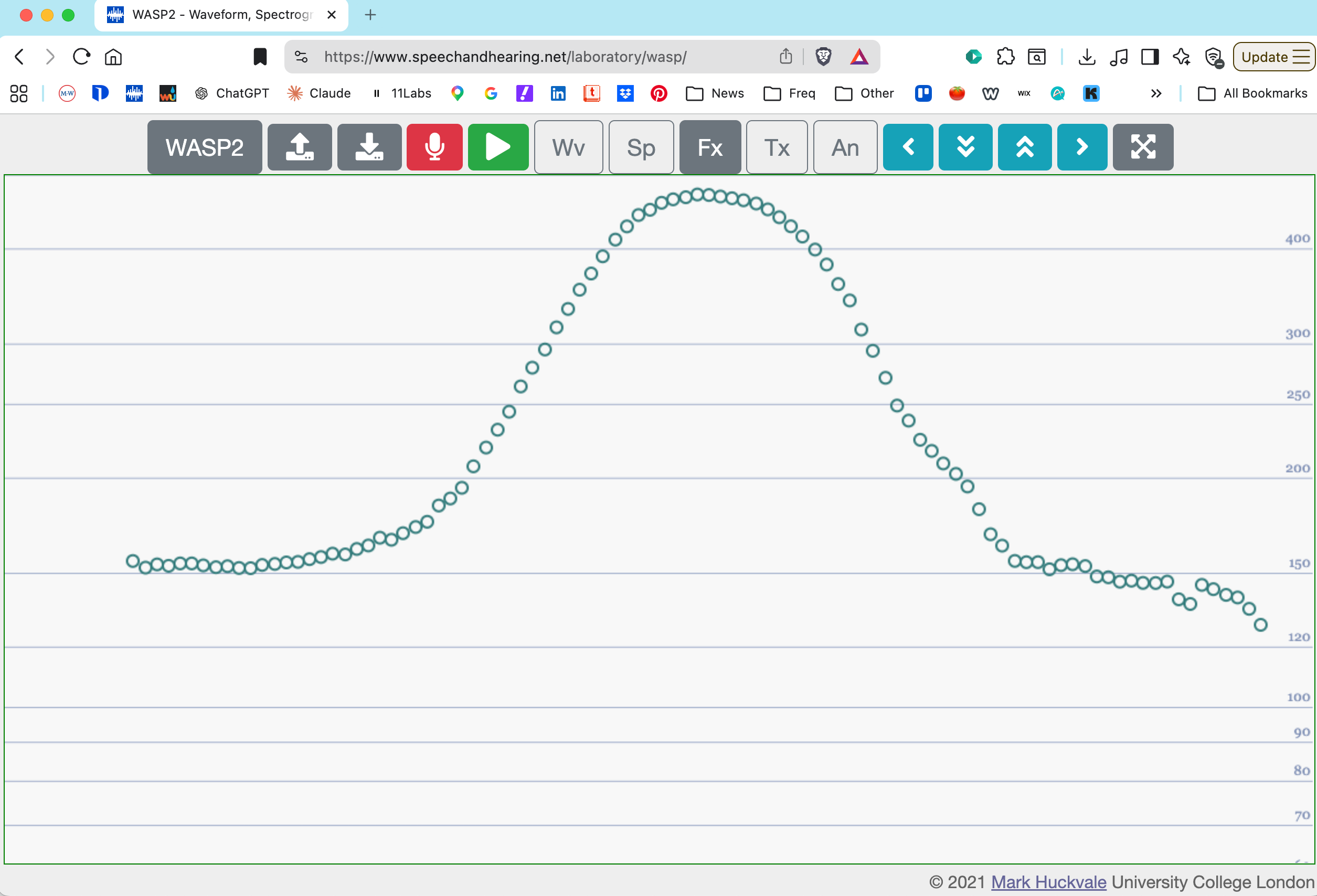
6. Use a very stretched out vowel, not too high in pitch (conveys deep understanding)
Short Phrases
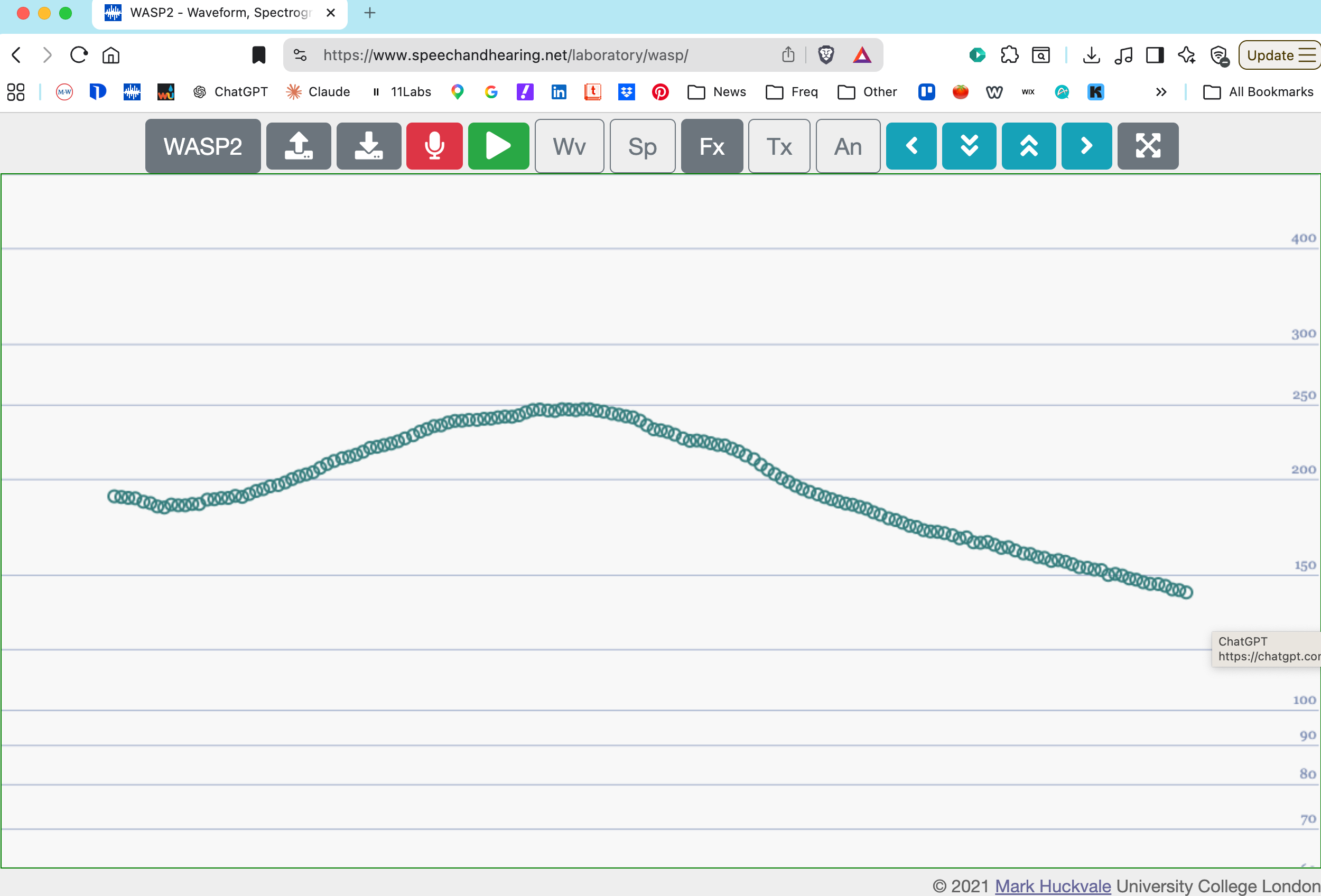
American English uses higher pitch and longer vowel duration to sound more friendly. You can exaggerate and sound too friendly which sounds like you’re faking it, or you can not go high enough in pitch and long enough with the vowel and not sound very friendly.
Experiment with those two extreme ends of the spectrum and everything in between.
When someone is in a bad mood and not making any effort to sound friendly, the pitch will fall in a short downward direction. This can happen when you’re not thinking about using intonation to sound friendly, especially if you’re thinking about something else.
Just be aware of how someone reacts to you may be due to how you said something and not what you said.
Practice in two different ways:
1) sound more friendly by using rising and falling pitch (and longer vowel duration)
2) sound not friendly by using a short downward pitch
The bold words and syllables are the stressed parts of the phrases.
Good morning
How are you? (casual: How are ya?)
I’m fine
Thank you
What time is it?
What’s your phone number?
Excuse me
I’m sorry
I’ll call ya later
See ya
Now that you’ve increased your awareness of how important pitch is in expressing meaning, and practiced some control of your pitch to create and express the meaning you want to, keep listening for how other people use pitch to notice good and bad examples. Imitate the good examples!